Our Location
Unit F1, 6/F, Kaiser Estate Phase 1, 41 Man Yue Street, Hung Hom, Kowloon, Hong Kong

Unit F1, 6/F, Kaiser Estate Phase 1, 41 Man Yue Street, Hung Hom, Kowloon, Hong Kong

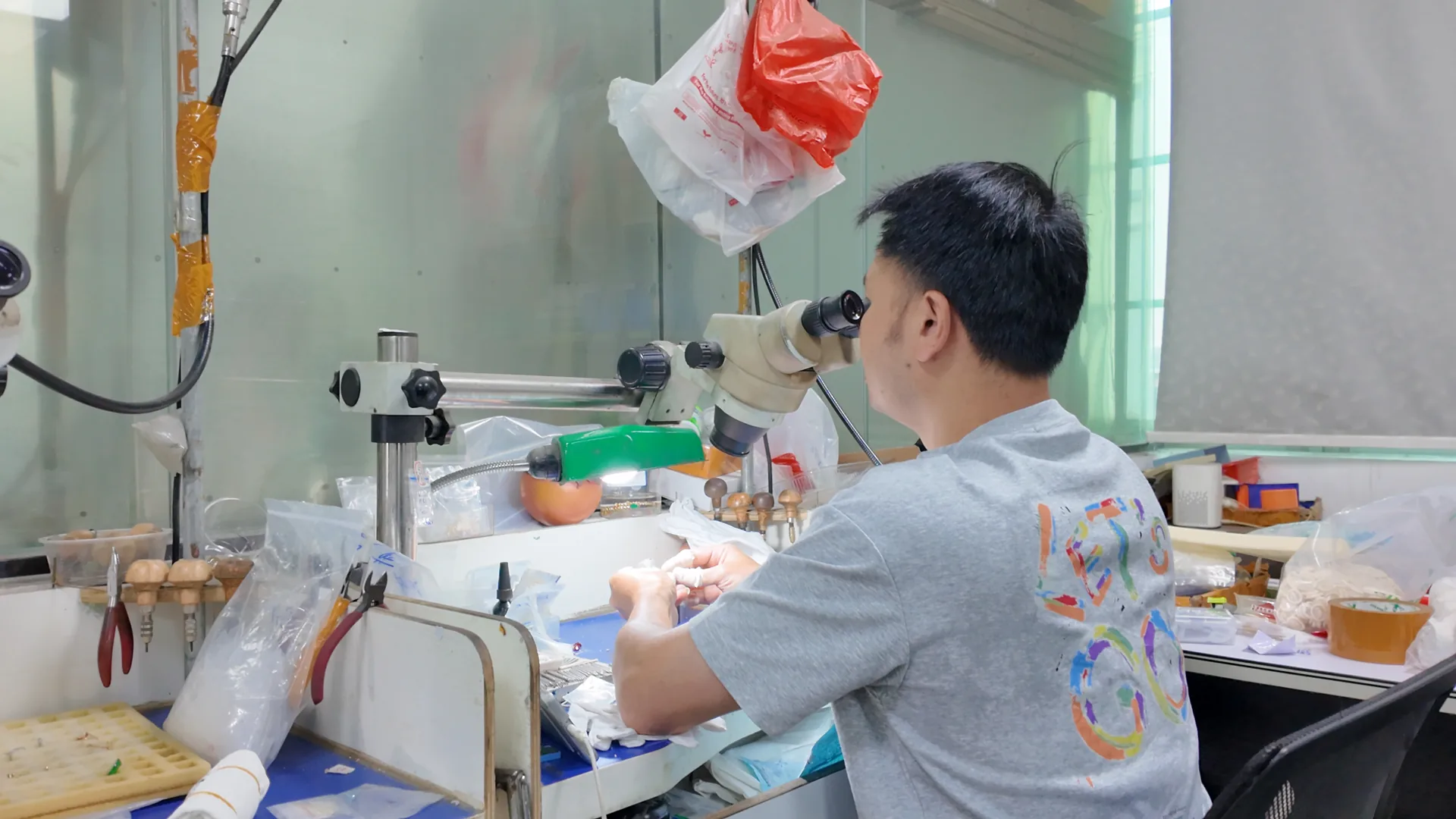
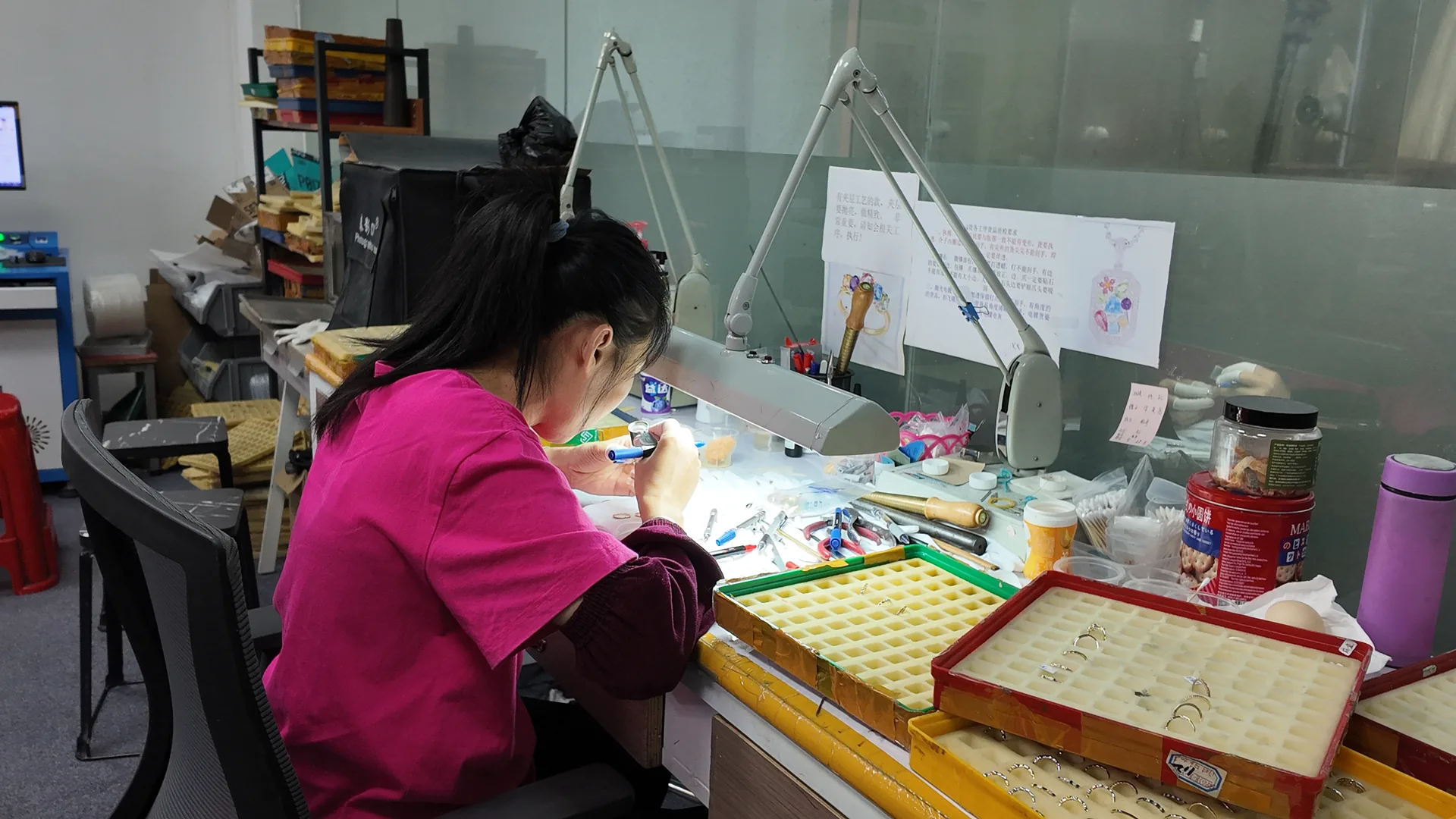
Most returns in plated and silver jewellery come from four places: plating thickness, stone security, clasp strength and sizing tolerance. We inspect all four on every batch, with eight documented checkpoints and a reference sample kept on file for each SKU.
A quality system is only as good as the things it measures. These are the four that decide whether a wholesale order comes back, and how we hold each one.
Agreed in microns on the spec sheet, then checked on finished parts — not assumed from the bath.
Setting checked by hand and under magnification; loose or tilted stones are pulled before packing.
Every clasp, hinge and post is opened and closed in QC. A clasp that fails in the shop fails in the carton.
Ring sizes and chain lengths measured against the approved sample, not against a nominal chart.
Each checkpoint has a written standard and a person responsible for it. Nothing moves to the next stage on a verbal OK.
Silver and brass stock checked for surface condition and hardness; clasps, posts and ear wires checked for spring and fit before they enter production.
The first casting off a new mould is compared with the approved CAD and render. Proportions, wall thickness and stone seats are signed off before the run continues.
Bodies are checked for porosity, deformation and seam lines. Castings that would show a defect under plating are rejected here, where the cost is lowest.
Surfaces are polished and cleaned before plating. Plating amplifies whatever is underneath it, so this is the stage where a mirror polish earns its money.
Colour matched against the approved reference sample under standard light; thickness checked against the figure agreed on the spec sheet.
Stones re-checked after plating, because plating heat and handling can shift a seat. Prongs dressed, surfaces checked for pits and polishing marks.
Clasps opened and closed, hinges swung, ear posts checked for length and thread. Ring sizes and chain lengths measured against the approved sample.
SKU count against the packing list, pieces bagged and labelled, carton sealed. A photograph of the packed carton is kept with the order record.
Test reports ship with the goods rather than being sent after you ask. If your market needs a test that is not on this list, tell us before production and we will quote it in.
| Test | Standard / method | Why it matters |
|---|---|---|
| Precious metal content | SGS assay | Confirms the silver or gold content you are paying for, lot by lot. |
| Nickel release | EN 1811 | The test behind “nickel-free” claims for items in prolonged skin contact. |
| Nickel, lead & cadmium limits | GB 11887-2012 | The Chinese national standard for jewellery, and a useful baseline for other markets. |
| Restricted substances | RoHS | Covers the plating chemistry and base materials used on the piece. |
| Coating thickness | QB/T 1135-2006 | Measures the gold or silver coating, so “heavy plated” becomes a number on paper. |
| Salt spray & tarnish | In-house, per batch | Simulates wear and humidity before the order ships, not after a complaint. |
Colour and dimensions drift when a supplier treats each order as a new job. For every SKU we produce, we keep an approved reference sample and the approved CAD on file. A repeat order six months later is measured against those two objects — not against a photograph or someone’s memory.
If a batch cannot match the reference, it does not ship. That single rule is the reason our long-term accounts can reorder without inspecting every carton.
State the target thickness and colour. We put both on the spec sheet and inspect against it.
Grade and size are agreed before sampling. A cheaper stone is a different product, not a discount.
Tell us the destination market and we will list the tests your buyers are likely to request.
Claims, returns and replacement handling are set out in Shipping & Returns. General ordering questions are answered in our FAQ.
Send the market you sell into and the material you plan to use. We will come back with the tests that apply and the documentation that ships with the batch.