
Our Location
304 North Cardinal St.
Dorchester Center, MA 02124

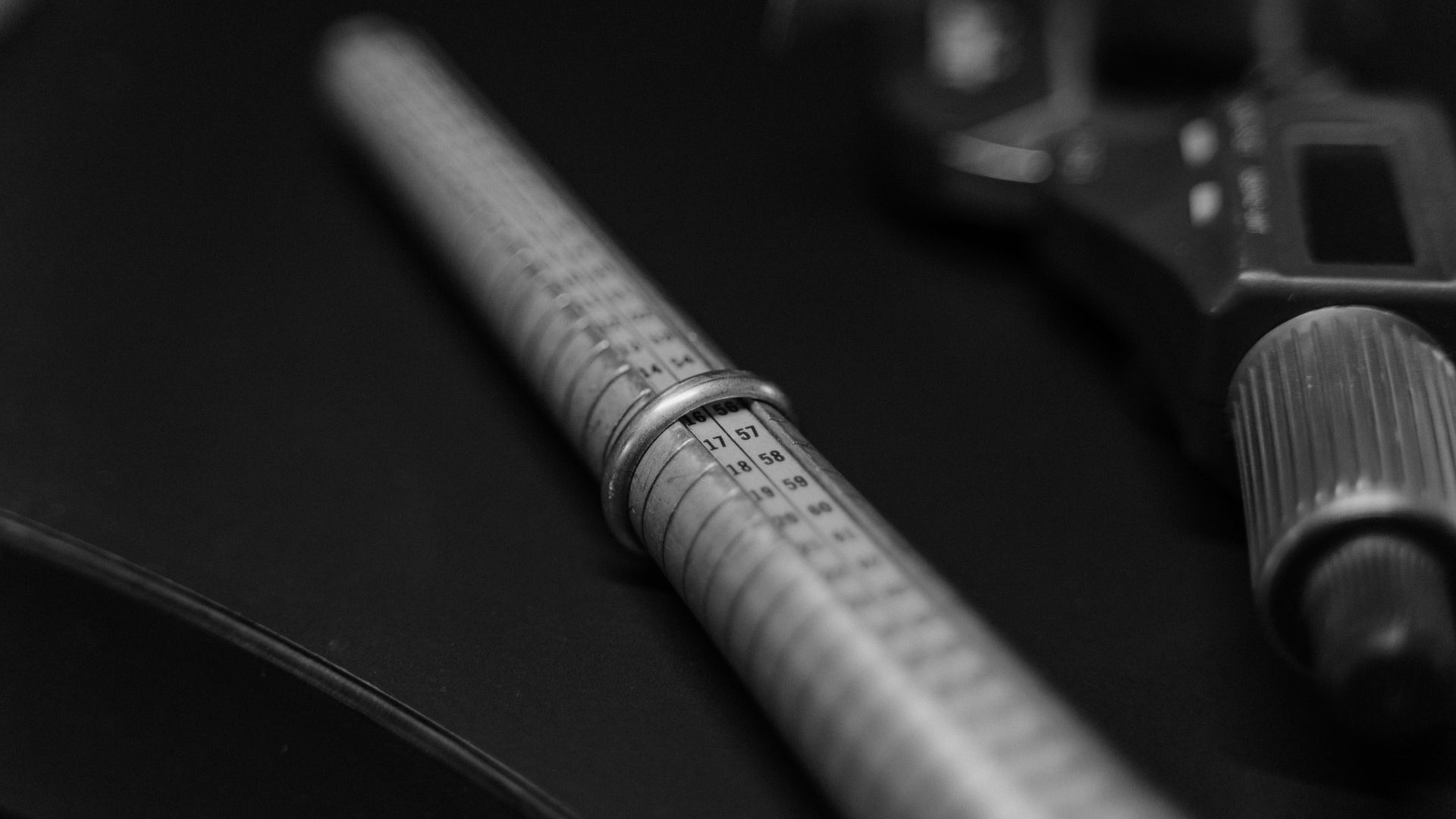
Ask any jewelry retailer which complaint tops the after-sales list and the answer is rarely “it tarnished” — it is “the size was wrong”. For wholesale buyers, ring sizing looks like the simplest line on the spec sheet, yet it quietly drives the most returns. The good news: sizing problems are almost always specification problems, and specifications can be written down. Here is how to get them right before the order leaves the factory.
A customer who orders a ring online is guessing between half-sizes based on a photo. If the piece arrives half a size off from what the chart promised, it goes straight back. The fix is not better inspection — it is agreeing on the measurement system and the tolerance in writing, so every unit in every batch lands on the same number.
Retail customers quote sizes in whatever system they grew up with: US sizes in North America, UK letters in the UK and Australia, ISO/EU numbers across much of Europe, and Japanese or Hong Kong numbers across Asia. Chinese and Hong Kong manufacturers often quote “港号” (HK size), which runs numerically higher than US sizes — a common source of confusion on first orders.
The professional move is to ignore all of them and spec the inner diameter in millimetres. A number like 17.3 mm is unambiguous in every country; a “size 7” is not. Use the chart below for conversion.
| US | UK / AU | EU / ISO | JP | Inner Diameter | Inner Circumference |
|---|---|---|---|---|---|
| 5 | J½ | 49 | 9 | 15.7 mm | 49.3 mm |
| 6 | L½ | 52 | 11 | 16.5 mm | 51.9 mm |
| 7 | N½ | 54 | 14 | 17.3 mm | 54.4 mm |
| 8 | P½ | 57 | 16 | 18.1 mm | 57.0 mm |
| 9 | R½ | 59 | 18 | 18.9 mm | 59.5 mm |
| 10 | T½ | 62 | 20 | 19.8 mm | 62.1 mm |
Once you agree on millimetres, agree on the tolerance. For bands up to 2.5 mm wide, ±0.10 mm on inner diameter is a realistic standard that a good workshop will hold on a finished piece. Wider bands and carved designs justify ±0.15 mm. If a quotation says nothing about tolerance, assume the supplier has not thought about it — and ask.
One more detail worth knowing: casting and polishing both move the finished dimension slightly, which is why a supplier should size the finished, plated piece — not the wax model and not the raw casting.

A 2 mm band in the “correct” size can feel loose, while an 8 mm band in the same size feels tight — the wide band contacts more of the finger. Customers who wear wide bands typically need half a size larger. If your collection mixes narrow and wide shanks, note the difference on your product pages; it prevents a whole category of returns.
The same specification discipline applies to other categories. Bangles are sold by inner diameter (56, 58 and 60 mm are the most common women’s sizes) with a practical tolerance of ±0.3 mm. Chain bracelets and necklaces are sold by length — 16, 17 and 18 cm cover most women’s wrists, and bracelet length should always be measured including the clasp, or your returns will drift half a centimetre.
If a customer sends you their favourite ring to match, measure the inner diameter at the narrowest point with a caliper, not a ruler, and measure twice — once at the band and once at the shoulder. Convert with the chart above. Measuring with a ruler, or measuring across a tapered design, is the single most common source of “the replacement does not fit”.
Sizing errors are cheap to prevent and expensive to discover. Put millimetres and tolerance on the spec sheet, have the factory confirm in writing, and check the first pieces off the line with a caliper before the batch ships.
